
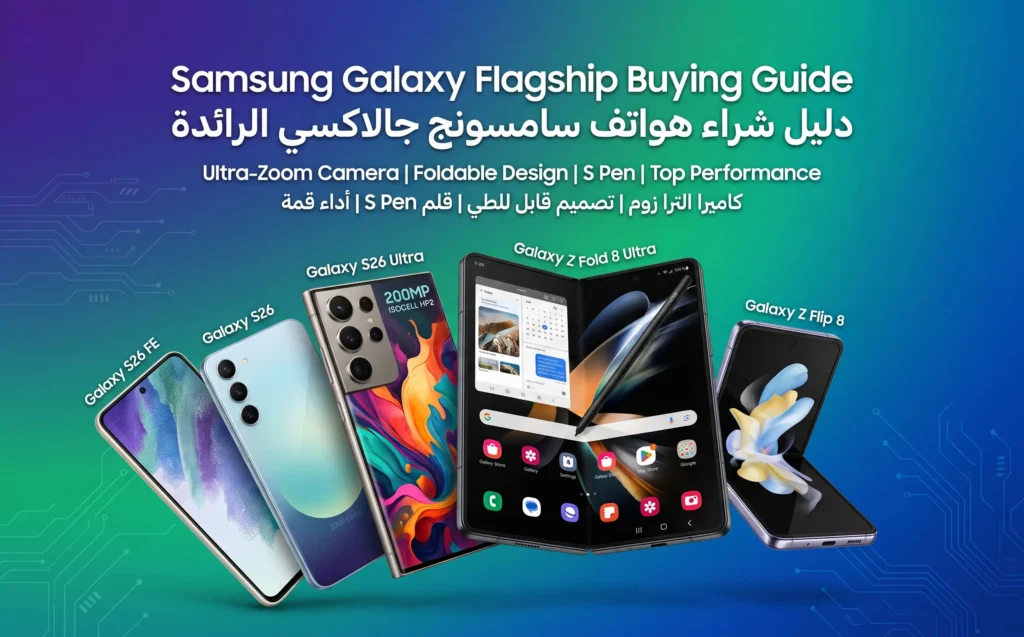
The Galaxy S-series and the foldables solve different problems, and picking between them (or between generations) comes down to what you actually do with a phone daily — not which one has the more impressive spec sheet.
S-series: the case for the conventional flagship
The standard Galaxy flagship line prioritizes camera performance, battery life, and display quality in a familiar form factor. It’s the right choice if you want flagship performance without adapting to a different way of holding and using a phone, and it typically holds resale value better than the foldables given the larger buyer pool.
Foldables: what you’re actually paying for
The fold format genuinely changes how you use a phone for multitasking and media — but it comes with a real trade-off in long-term durability, particularly around the hinge and inner screen, and typically a steeper price. If you’re drawn to a foldable, be honest about whether you value the format itself or are buying it for the novelty; the format is worth the premium only if you’ll actually use the multitasking and larger-screen benefits regularly.
Authorized-channel pricing vs. common grey-market entry points for Samsung
Samsung flagships see grey-market entry through several common channels in the Gulf: international-region units brought in outside official distribution, and “open box” units sold as new without the paperwork to verify their origin. Both can carry warranty gaps that only surface when you actually need service. See the full authorized vs grey market breakdown for how to verify before you buy — asking for the distributor invoice and checking the box region against local specifications are the two checks that catch most grey-market units before payment.
What to check
- Confirm Gulf-region specification, not an international variant with different band support or software.
- Ask directly whether the unit came through Samsung’s official Kuwait distribution.
- Compare current authorized pricing against the price tracker — a price meaningfully below every tracked authorized listing is the clearest grey-market signal.
Choosing between the base, Plus, and Ultra tiers
The base flagship covers the core camera and performance experience most buyers need. The Plus tier mainly adds a larger battery and screen without a major camera upgrade — worth it if screen size and battery life are your priority, not if you are chasing camera performance. The Ultra adds the most capable camera system and, on some generations, S Pen support — the meaningful upgrade for buyers who actually use advanced camera features or stylus input regularly.
Camera system differences that actually matter day to day
The gap between tiers shows up most in zoom performance and low-light detail — daylight photos look similar across the lineup on recent generations. If you rarely zoom or shoot in low light, the base tier’s camera covers most real-world use nearly as well as the Ultra’s.
Software support window
Samsung’s flagship line generally carries a long multi-year software and security update commitment across all tiers in a given generation — this is one area where the base model does not lag behind the Ultra, so it should not factor heavily into the tier decision.
Frequently asked questions
Is the S Pen worth choosing the Ultra for?
Only if you will genuinely use it regularly for notes or sketching — it is a niche feature for most buyers, and the Ultra’s price premium is better justified by the camera system if S Pen use is occasional at best.
Do foldables and the S-series share software support timelines?
Generally yes within the same generation, but always confirm on the specific model — this is not the differentiator between the two form factors, the physical design and durability trade-off is.
How do I spot a grey-market Samsung unit specifically?
Confirm Gulf-region specification and ask directly about official Kuwait distribution — see the checklist in the section above.