
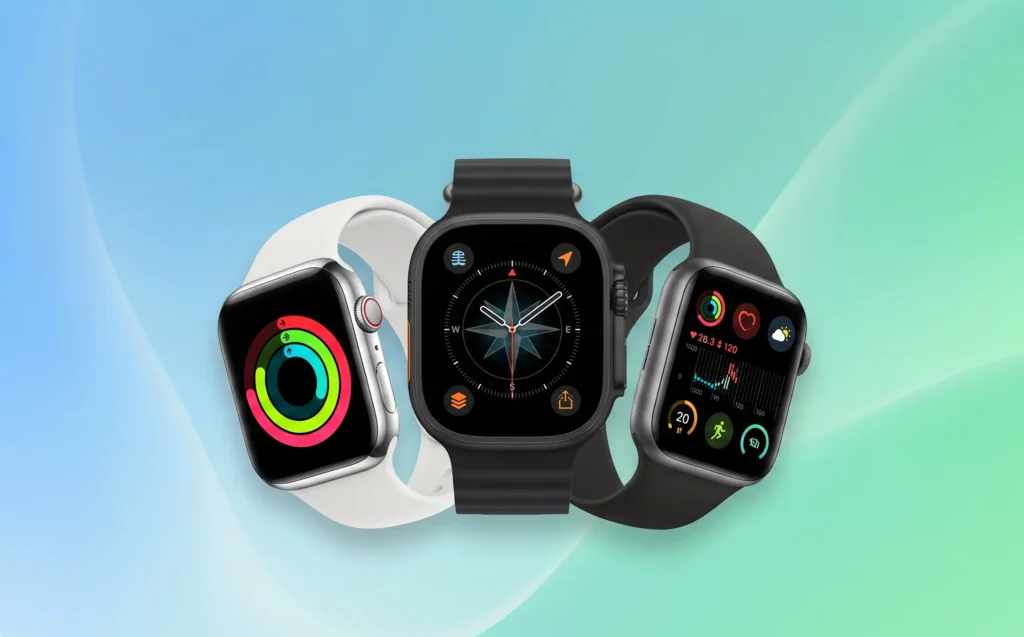
Series vs. Ultra vs. SE isn’t just a battery-and-screen-size question in Kuwait’s climate — sweat and heat exposure during summer months change the calculus on band material and case durability too, in a way that reviews written for cooler climates don’t usually cover.
Series: the balanced default
The standard Series line covers the core fitness tracking, notifications, and health features most buyers actually use day to day, in a case size and weight that’s comfortable for all-day wear — including overnight sleep tracking, which matters if that’s a feature you plan to use.
Ultra: who actually needs it
The Ultra’s real advantages — significantly longer battery life, a brighter always-on display, and a more rugged case — matter if you’re doing genuine outdoor activity in Gulf heat where battery drain and screen visibility in direct sun are real daily frictions, not occasional edge cases. If your use is mostly indoor gym sessions and daily wear, the Ultra’s extra durability and battery headroom go largely unused relative to its price premium.
SE: where the value actually is
The SE drops the always-on display and a few sensor features but keeps the core fitness and notification experience most people actually rely on. It’s the better value pick if you want the Apple Watch experience without paying for capabilities you won’t use.
Band material and Gulf summer heat
Sport bands (silicone/fluoroelastomer) handle daily sweat exposure and heat noticeably better than leather or metal-link bands, which can degrade or become uncomfortable faster under sustained Kuwait summer conditions — leather in particular ages poorly with regular sweat contact. If summer wear is a big part of your use case, prioritize a sport band regardless of which case size or tier you choose; you can always add a dressier band for occasions separately.
Buying authorized
Battery replacement and screen repair are the most common service needs on a smartwatch, and both are meaningfully more straightforward through an authorized Kuwait service channel than through a grey-market unit. Check the authorized vs grey market guide and current pricing on the price tracker before buying.
Cellular vs. GPS-only
Cellular models let the watch stay connected for calls, messages, and streaming without the phone nearby, useful for gym sessions or runs where you do not want to carry a phone. GPS-only covers everything else just as well and costs less upfront plus avoids an ongoing cellular plan add-on, which is the bigger real cost difference over a few years of ownership.
Health features worth knowing about
Beyond basic activity tracking, features like ECG and blood oxygen monitoring are genuinely useful for buyers with a specific health-monitoring reason to want them, but should not be the deciding factor for a general fitness and notifications use case — the base Series tier already covers the everyday health tracking most buyers actually check regularly.
iPhone compatibility across generations
A new Apple Watch requires a reasonably recent iPhone software version to pair and fully function — check your current iPhone’s compatibility before buying a new watch, especially if you are using an older iPhone model that may not support the latest watchOS features.
Frequently asked questions
Does band material affect the watch’s own warranty?
No — the band and watch are typically covered separately, and swapping to a sport band for Kuwait summer heat does not affect the watch’s own warranty coverage.
Is battery life meaningfully different between tiers?
Yes, the Ultra’s larger battery is a genuine multi-day-capable difference versus the Series’ roughly one-day battery life — relevant mainly for extended outdoor use, as covered above.
Should I buy AppleCare+ for a smartwatch?
Worth considering given how exposed a wrist-worn device is to drops and scratches during Kuwait’s outdoor conditions — weigh the cost against the watch’s own price tier.